
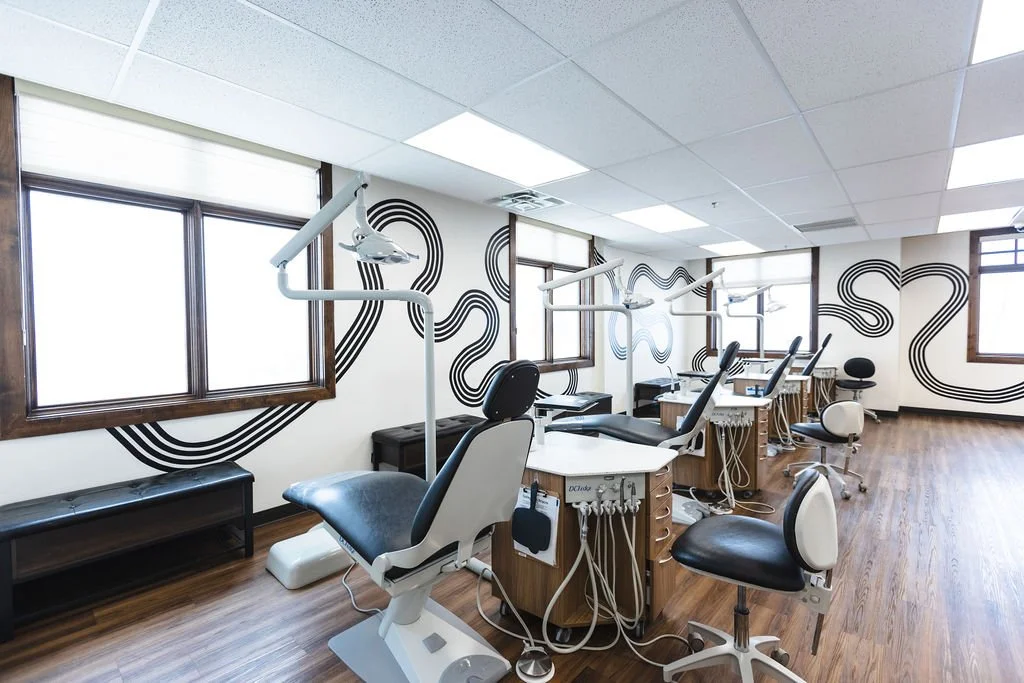
When a child should first see an orthodontist, whether they really need braces, what early treatment involves and what a palatal expander does. Written for parents deciding whether to book an evaluation — which at East Idaho Orthodontics is free from age 7.
Medically reviewed by Dr. Andy Higham, DDS, MS, orthodontist — East Idaho Orthodontics. Last reviewed October 2026.
When Should a Child First See an Orthodontist?
The American Association of Orthodontists recommends a first orthodontic evaluation by age 7. At that age the first permanent molars and front teeth are in, which is enough to assess the bite and predict crowding. Most 7-year-olds do not need treatment — at East Idaho Orthodontics roughly nine in ten are simply monitored — but the few who have a crossbite, a severe overjet, an underbite or a habit benefit from early treatment that is harder or impossible later. The evaluation is free.
Key takeaways
- First evaluation by age 7, per the American Association of Orthodontists.
- About one in ten 7-year-olds we see needs treatment then; the rest are monitored free every 6 months.
- Crossbite, underbite, severe overjet and habits are the reasons not to wait.
What the orthodontist is checking at 7
How the upper and lower jaws relate — is one ahead of or narrower than the other
Whether there will be room for the permanent teeth
Crossbites and any shift of the jaw on closing
Front teeth that stick out and are at risk of injury
Habits — thumb, tongue, mouth breathing
Teeth that are missing, extra, or erupting in the wrong place
What usually happens after the first visit
| OUTCOME | WHAT IT MEANS |
|---|---|
| Nothing needed — recheck in 12 months | Most children. Free growth checks until the right time. |
| Monitor closely — recheck in 6 months | Something is developing that may need action soon. |
| Early treatment now | Crossbite, severe overjet, underbite, habit, or a blocked tooth. Usually about 12 months. |
| Full treatment now | Rare at 7. Occasionally by 9–10 when most permanent teeth are in early. |
The best age for braces
For most children, full treatment starts between 11 and 14, once most permanent teeth are in and while growth is still available. Starting earlier does not shorten it. Starting later works, but loses the help of growth for bite correction.
Signs that should not wait for 7
Lower teeth ahead of upper teeth (underbite)
Jaw shifting to one side on closing
Baby teeth lost very early, especially from decay
Front teeth badly protruding in an active child
Thumb sucking continuing past age 5
Frequently asked questions
-
Only an evaluation can say. Only about one in ten of the 7-year-olds we evaluate needs treatment at that age. Many more benefit from treatment as teenagers, and some never need it.
-
No — it is the age at which the problems that matter become visible, and most children are simply told to come back later.
-
Come in. Ten is still early enough for most early-treatment options.
Does My Child Really Need Braces?
Not every child does. Only about one in ten of the 7-year-olds evaluated at East Idaho Orthodontics needs treatment at that age; some children never need it, and many who will need it do not need it yet. An orthodontist decides from records — how the teeth fit together, how much room the permanent teeth will have, how the jaws relate — not from how the front teeth look. At East Idaho Orthodontics in Idaho Falls the evaluation is free, and the most common recommendation for a 7-year-old is to wait and check again in a year.
Key takeaways
- Only about one in ten 7-year-olds needs treatment at that age; many who will not need it yet.
- Bite problems, teeth at risk and habits are worth treating; mild cosmetic crowding can wait.
- "Wait" means free monitoring every 6 months until the right start date, usually 11–14.
Problems that are worth treating
A bite that does not work — crossbite, underbite, a deep bite where lower teeth hit the palate, an open bite that makes biting through food hard.
Teeth at risk — front teeth protruding enough to be injured; teeth impacted or erupting into the roots of others.
Crowding severe enough to trap food and make cleaning hard, or to leave a permanent tooth with nowhere to go.
Habits reshaping the bite — thumb or finger sucking past age 5, persistent tongue thrust.
A jaw shifting to one side on closing, which can steer growth off-centre.
Problems that are usually fine to leave
Mild crowding or small gaps that do not affect the bite — a cosmetic choice, not a health one, and one the child can make later.
Gaps between baby teeth. These are normal and usually close as permanent teeth erupt.
A slight overbite with no functional problem.
"Crooked" front teeth in a 7-year-old whose permanent teeth are still arriving. Alignment often improves on its own.
What "wait" actually means
Waiting is a plan, not a shrug. It means a free check every 6 months while the permanent teeth come in and the jaws grow, and a start date chosen when treatment will be most efficient — usually between 11 and 14. Starting earlier rarely shortens treatment; starting at the right time often does.
If treatment is recommended — questions to ask
What specifically is the problem, and what happens if we do nothing?
Is this early treatment now, full treatment now, or full treatment later?
What would you do if this were your child?
What does it cost, and is that the whole price?
Frequently asked questions
-
In a young child, alignment often improves as permanent teeth erupt and the jaw grows. In a teenager or adult, no.
-
No. Most adult treatment is elective. The point is that it should be a choice made with accurate information, not a medical necessity presented as one.
-
Usually, at a routine checkup. But an orthodontic evaluation is free and does not need a referral.
What Is a Palatal Expander?
A palatal expander is a small appliance fixed to a child’s upper back teeth that gently widens the upper jaw over a few weeks. It works in children between about 7 and 12 because the two halves of the upper jaw have not yet fused; a parent turns a key on the schedule the orthodontist sets — it varies from child to child — with each turn widening the appliance by about a quarter of a millimeter. Expanders correct crossbites and create room for crowded teeth. Active expansion takes a few weeks; the expander then stays in place 4–6 months while new bone fills in. East Idaho Orthodontics fits expanders in Idaho Falls as part of early treatment.
Key takeaways
- An expander widens a child’s upper jaw while the two halves are still unfused — roughly ages 7–12.
- Turning takes a few weeks on a schedule set for each child; the appliance stays in 4–6 months.
- A gap between the front teeth during expansion is expected and closes on its own.
Who needs one
A posterior crossbite — upper back teeth biting inside the lower ones
A narrow upper jaw with severe crowding, to create room without extractions
A lower jaw that shifts sideways on closing because the upper arch is too narrow
Sometimes, before treating an underbite, to allow a facemask to be worn
What it is like, week by week
| WHEN | WHAT HAPPENS |
|---|---|
| Day 1 | Fitted in about 20 minutes. Feels large; speech and swallowing are awkward for a few days. |
| The turning weeks | A parent turns the key on the schedule we set. Pressure across the nose and cheeks for a minute after each turn. A gap opens between the front teeth — this is expected and closes on its own. |
| After active turning | Turning stops. The expander stays in 4–6 months as a passive retainer while bone forms in the gap. |
| Removal | Takes minutes. Braces, a retainer or monitoring follows. |
Does an expander hurt?
It produces pressure, not pain — most children describe a tight feeling across the roof of the mouth and sometimes under the eyes for a few minutes after a turn. Children’s pain relief is rarely needed after the first two or three days. The gap between the front teeth surprises parents more than it bothers children.
Caring for an expander
Brush around it after meals; a water flosser helps.
Avoid sticky and very hard foods that could bend it.
If the key gets stuck or a turn is missed, do not force it — call us.
If it comes loose, keep it and call the same day.
Frequently asked questions
-
Because the two halves of the upper jaw are separating slightly. New bone fills the gap and the teeth drift back together within weeks.
-
The jaw has fused, so a standard expander cannot widen it. Adults need surgically assisted expansion or a bone-anchored expander.
-
For a week or two. It resolves as the tongue adapts.
Ready to talk it through?
Consultations at East Idaho Orthodontics are free, take about an hour, and end with a written plan and an exact price. Request a free consultation.
Related: Early orthodontic treatment · Orthodontic Resource Center